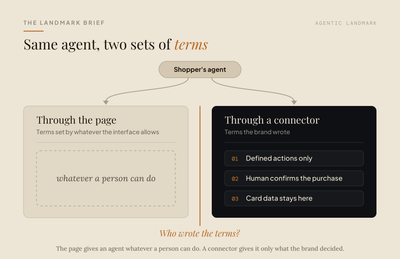
The page writes the terms
When an agent can use the page a human uses, the page is the only rule the brand wrote. Walmart has written its rules down. Most brands have not.
Agentic Landmark · The Brief
Briefs tagged retail in The Landmark Brief.
When an agent can use the page a human uses, the page is the only rule the brand wrote. Walmart has written its rules down. Most brands have not.
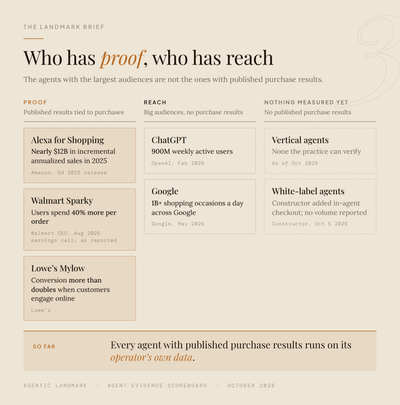
Sort shopping agents by evidence instead of audience and the order changes. Three have published purchase results, all run by retailers on their own data. Two have nothing measured yet.
Five kinds of shopping agent already evaluate your products, and each fails a brand for a different reason. A map of the five, what each needs from you, and the one requirement they all share.
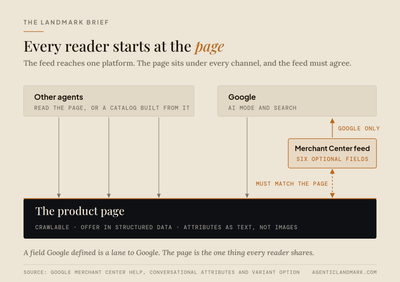
Google has published six optional Merchant Center fields that tell its conversational surfaces what to know about a product. What each one carries, which to fill first, and the rule that keeps the feed from replacing the page: the values have to match.
Amazon shut Meta's Muse agent out and Shopify let it in, twelve days after quietly switching the channel on for roughly a million merchants. Both platforms made the same decision on behalf of every brand underneath them. What the default turned on, and what to do this week.
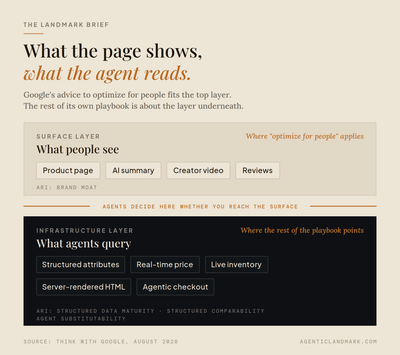
Google's holiday guidance tells retailers to optimize for people, not bots. Its other recommendations are all written for machines: richer product feeds, real-time price and inventory, agentic checkout. The contradiction resolves once you separate the surface layer from the infrastructure layer.
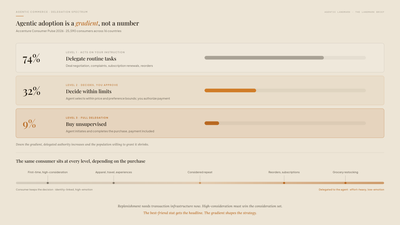
Accenture's best-friend stat will get the headlines. The 74-32-9 gradient underneath should shape strategy: 74% delegate routine tasks, 32% decide within limits, 9% buy without approval. Not one figure but three levels of authority, and the same consumer occupies each for different things.
Adyen Agentic removes the protocol-fragmentation bet: integrate once, and it translates your catalog across every agentic platform. The thesis is right, build for the layer, not the platform. But the layer solves integration, not data quality. A bad catalog gets distributed everywhere at once.
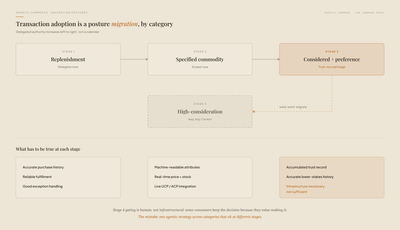
The agentic commerce conversation conflates two behaviors: using AI to discover and letting AI buy. Discovery is mainstream; delegated transaction is a fraction of it, because trust accrues on a schedule no announcement can rush. Adoption moves category by category, through four delegation postures.
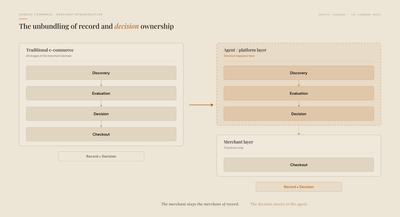
Every agentic commerce protocol was built to reassure merchants: the brand stays the merchant of record. Real protection, and incomplete. The merchant of record is not the merchant of decision, and under agents the two unbundle. The decision is made on the platform before your checkout ever fires.