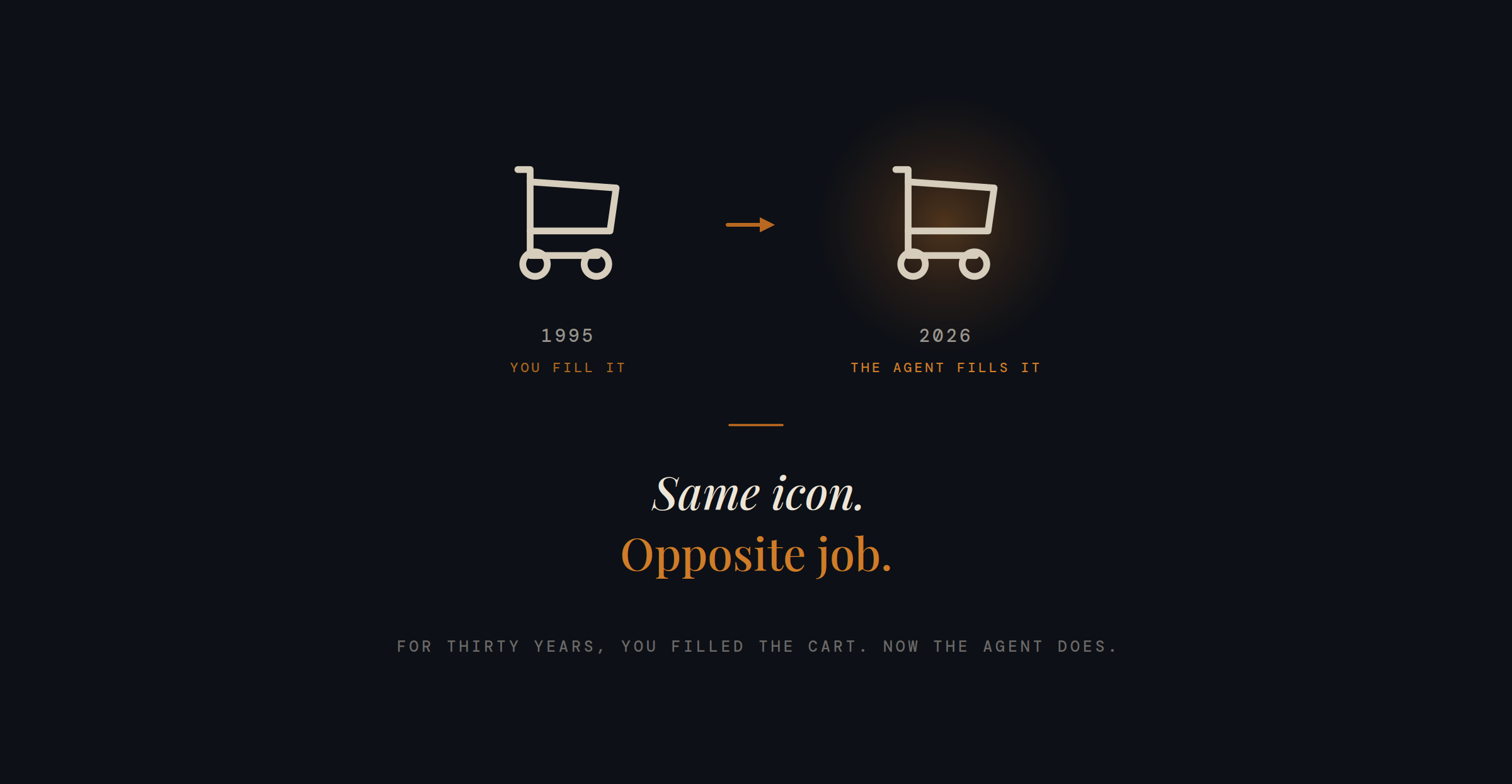
A while back, I argued the shopping cart icon was a thirty-year-old skeuomorph living on borrowed time.
A digital artifact that mimics a physical behavior, pushing a cart through a store, for no reason other than familiarity. We kept it because shoppers in 1995 needed a familiar metaphor. Then we spent three decades optimizing a process built around it: browse, add, check out, abandon. Seventy percent of the time, abandon.
This week at I/O, Google replaced it.
They introduced the Universal Cart, a cart that assembles your purchases from multiple merchants and is managed by an AI agent on your behalf. AI Mode, the surface it runs on, just crossed one billion monthly users.
Here's the part that matters.
For thirty years, the cart was something you filled. One store at a time. The Universal Cart inverts that completely. You don't fill it; the agent assembles it. Not from one merchant, but across every merchant that can answer the agent's questions. There's no browsing phase to abandon. The cart is built from a brief, not from a session.